
BERLIN/FRANKFURT: Investment by German companies in China reached its highest level in four years in 2025, according to newly compiled data for Reuters, highlighting how concerns over US President Donald Trump’s trade war are driving businesses and governments to strengthen economic ties beyond the United States.
Data from the IW German Economic Institute showed that German investment in China exceeded seven billion euros (US$8 billion) between January and November last year, marking a 55.5 per cent increase compared with the 4.5 billion euros recorded in both 2024 and 2023.
The figures illustrate how Trump’s hardline trade stance during his first year back in office — including sweeping US tariffs on European Union imports — has prompted companies in Europe’s largest economy to pivot towards China as an alternative market.
This shift coincides with broader global efforts to diversify trade relations, as Britain sends a business delegation to China, the European Union moves closer to a trade agreement with South America, and Canada looks to deepen trade links with China and India.
At the same time, Berlin has been attempting to strike a balance between adopting a tougher position on Beijing over trade and security issues while avoiding harm to its crucial economic relationship with China, Germany’s largest trading partner.
“German companies are continuing to expand their activities in China – and at an accelerated pace,” Juergen Matthes, head of international economic policy at the IW institute, told Reuters, pointing to efforts by firms to reinforce local supply chains.
Reuters reported last week that German companies almost halved their investments in the United States during the first year of President Donald Trump’s second term.
Fear of geopolitical risks
Matthes said the redirection of investment was also fuelled by growing worries “about geopolitical conflicts”, which have encouraged companies to strengthen their China operations so they can function more independently in the event of major trade disruptions.
-Advertisement-
“Many companies say: ‘if I’m only producing in China for China, I’m reducing my risk of being affected by possible tariffs and export restrictions’.”
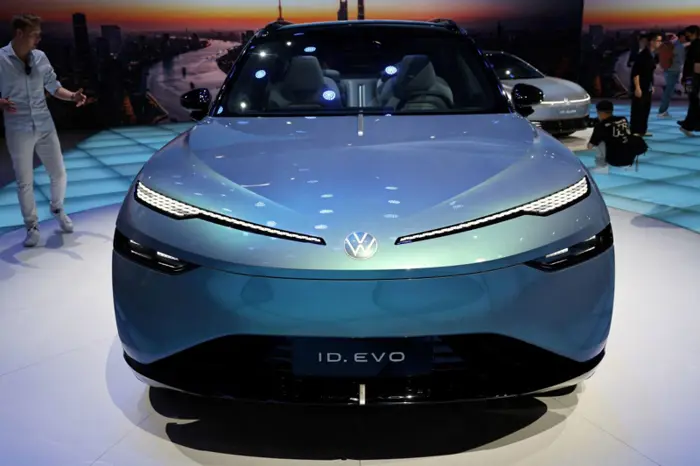
Major German corporations such as BASF, Volkswagen, Infineon and Mercedes-Benz remain highly reliant on the Chinese market, which accounts for a significant share of global car and chemical sales.
German motor and fan manufacturer ebm-papst said it invested 30 million euros last year to expand its operations in China, representing more than one-fifth of its total investments, in a move aimed at producing closer to its customers.
“This model has proven to be an important anchor of stability, especially in times of tariffs and geopolitical tensions,” the company said in a statement, adding that it also plans to expand its operations in the United States this year.
Overall, the 2025 investment total surpassed the six billion euro annual average recorded between 2010 and 2024, according to the IW report, which is based on data from Germany’s Bundesbank.
China reclaimed its position last year as Germany’s largest trading partner, after briefly being overtaken by the United States in 2024, driven by an increase in imports from the world’s second-largest economy.
–Reuters