

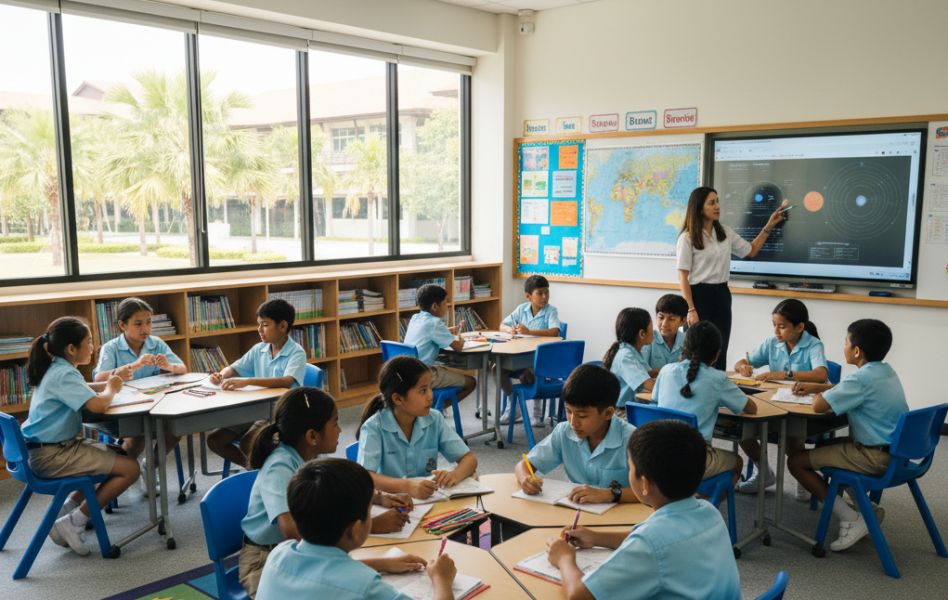
New Delhi 27 April 2026 (The Capital Post) – A growing number of affluent parents in India are moving their children from traditional schools to international institutions, reflecting a shift away from exam-focused education toward more holistic and skills-based learning approaches.
Many parents are increasingly dissatisfied with the long-standing emphasis on memorisation and high-stakes examinations in the local system, opting instead for globally recognised curricula such as the International Baccalaureate (IB) and Cambridge programmes. These systems prioritise critical thinking, research, and practical application over rote learning.
The trend is gaining traction across the country, including in smaller cities, as families seek broader educational experiences that include extracurricular development, creativity, and international exposure. Experts say this reflects changing expectations, with parents now placing greater importance on adaptability, communication skills and global mobility for their children.
Despite the advantages, the move comes at a significant cost. International schools often charge substantially higher fees than local institutions, sometimes more than double, making them accessible primarily to wealthier households.
-Advertisement-
India has seen rapid growth in the number of such schools, with nearly 1,000 international institutions operating nationwide, positioning the country among the largest markets globally for international education.
However, concerns remain among some parents about whether students from international systems can easily transition back into India’s highly competitive higher education framework, which still heavily relies on traditional academic rigour and standardised entrance exams.
Even so, the shift highlights a broader transformation in India’s education landscape, where rising incomes, global aspirations and policy reforms are gradually reshaping how families approach schooling and long-term career pathways.-The Capital Post