
PARIS: As humanity produces ever-growing volumes of digital information, concerns are mounting over how long today’s storage technologies can actually last. Traditional hard drives and magnetic tapes often degrade within decades, requiring constant backups and energy-intensive data centres.
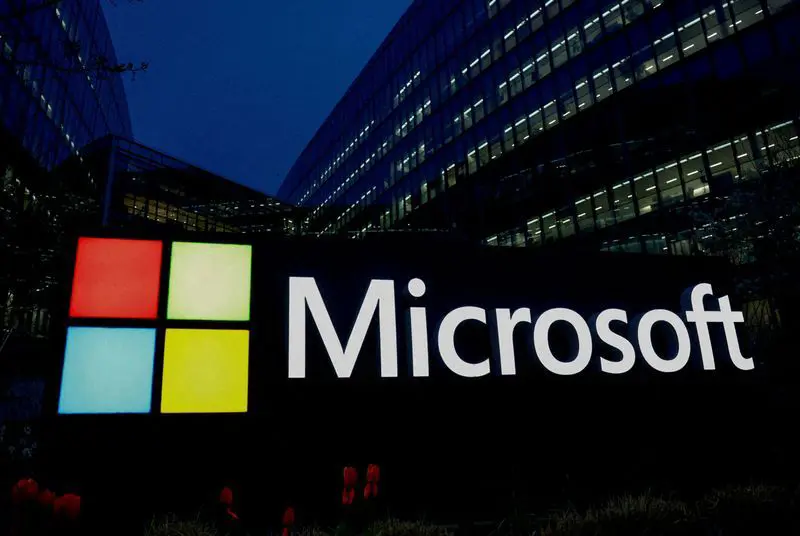
Now, Microsoft says it may have found a long-term solution: storing data in laser-etched glass capable of lasting more than 10,000 years.
Since 2019, the company’s Project Silica has been experimenting with encoding data onto silica glass plates — a nod to early photographic techniques that relied on glass negatives. Silica glass is highly durable and resistant to temperature shifts, moisture and electromagnetic interference, making it more stable than conventional storage media.
In findings published in the journal Nature, Microsoft’s research division said Silica is the first glass-based storage system proven reliable for writing, reading and decoding data.
How the Technology Works
The process begins by converting digital bits into symbols that correspond to three-dimensional pixels known as voxels. Using high-powered laser pulses, these microscopic voxels are embedded layer by layer into square glass plates roughly the size of a CD.
To retrieve the data, researchers use a specialised microscope capable of scanning each layer. The information is then decoded with the help of artificial intelligence algorithms.
According to the study, the glass could endure temperatures as high as 290°C for over 10,000 years — suggesting even longer survival at room temperature. However, researchers did not test how the plates would withstand physical destruction or chemical corrosion.
Unlike traditional data centres, the glass plates require no climate-controlled storage, potentially reducing energy use. Another key advantage is security: once written, the data cannot be altered or hacked.
Challenges Ahead
Despite the promise, experts caution that hurdles remain. In a separate commentary in Nature, researchers Feng Chen and Bo Wu from Shandong University — who were not involved in the project — noted challenges such as increasing writing speeds, enabling large-scale production, and ensuring long-term accessibility of the data.
Still, they described the technology as a “viable solution” for safeguarding human knowledge. A single plate, they estimated, could hold the equivalent of around two million printed books or 5,000 ultra-high-definition 4K films.
If successfully scaled, they said, glass storage could become a milestone in the history of information preservation — comparable to ancient inscriptions, medieval manuscripts or modern hard drives — potentially carrying the legacy of human civilisation across millennia.
-Thestar
-Advertisement-
Related