

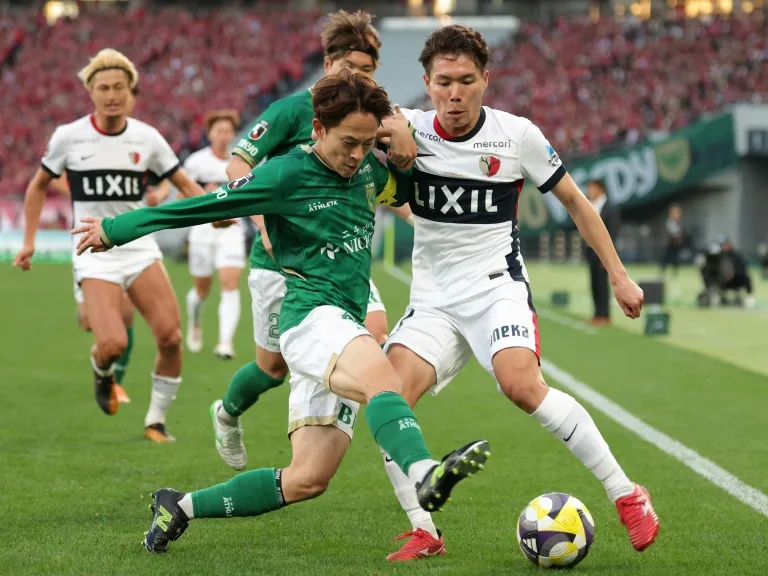
Japanese football officials are optimistic that the most significant overhaul in the J-League’s 33-year history will help elevate standards and accelerate the careers of the nation’s top young players as the league begins aligning its season with major global competitions from Friday.
Since its establishment in 1993, the J-League season has typically run from February to November. That structure will change from the next campaign, which will start in August and conclude in May, matching the football calendars used in countries such as England and Spain.
J-League Chairman Yoshikazu Nonomura said the long-discussed shift could strengthen both individual player development and the overall progress of Japanese football.
“Previously, our competitors were neighbouring clubs or domestic rivals,” Nonomura said in comments provided to Reuters by the J-League.
“But now, our clubs’ rivals are Europe’s top clubs, and, for example, for a 20-year-old centre forward at a J-League club, his rivals are 20-year-old centre forwards excelling in Europe.
“That’s the kind of world it should be, yet focusing solely on domestic football inevitably hinders growth. This is clear from the data, so we’re trying to fundamentally change things.
“It also matters for transfers and for people whose jobs are related to football, whether they work under global standards or only within a domestic industry framework.
“By changing the season calendar, competitors naturally change, awareness changes too, and various benefits should emerge.”
In recent years, increasing numbers of Japanese players have moved to top European leagues, with most members of the national team under coach Hajime Moriyasu now based in countries such as England, Germany and Belgium.
Under the previous calendar, Japanese clubs were frequently disrupted when players departed for Europe during the summer transfer window, often in the middle of the domestic season.
-Advertisement-
Nonomura believes the calendar realignment is a crucial step for Japan to narrow the gap with the world’s leading football nations.
“We spent about 30 years establishing ourselves as an industry in Japan, with considerable success, but we have also fallen quite far behind the global football market’s expansion over those same 30 years,” he said.
“The idea that the season calendar should change has existed for about 20 years, and I think there are many advantages to it.”
Extreme summer heat has long affected football in Japan, impacting match quality and spectator turnout, while mid-season player transfers have posed further challenges for clubs.
The revised schedule is also expected to provide better preparation for major international tournaments, including this summer’s World Cup, where Japan will make its eighth consecutive appearance.
To bridge the gap between the conclusion of the 2025 season in December and the start of the new campaign, the J-League has introduced a four-month transitional competition beginning Friday.
The tournament will be contested regionally among the league’s 20 top-division teams before progressing to playoffs, with the champions earning qualification for the next Asian Champions League Elite.
-reuters
-TheStar