

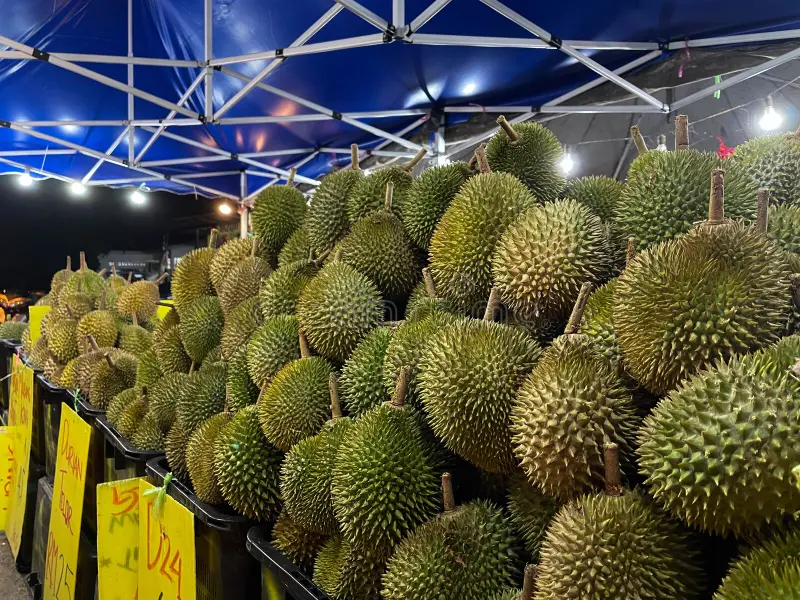
BEIJING 29 April 2026 (The Capital Post) – China’s booming demand for durian is rapidly transforming regional trade and logistics networks across Southeast Asia, with exporters and supply chain operators racing to meet surging consumer appetite for the tropical fruit.
Large volumes of fresh durians from Thailand, Malaysia, Vietnam and Cambodia are now entering China through increasingly sophisticated transport systems, including express rail services, cold-chain containers and high-capacity seaports designed to speed up deliveries while preserving fruit quality.
Chinese customs data showed that the country imported approximately 1.87 million tonnes of fresh durians in 2025, reinforcing its position as the world’s largest consumer market for the fruit. Analysts said rising incomes, stronger purchasing power and improved logistics infrastructure have significantly expanded the customer base beyond major cities into smaller regional markets.
-Advertisement-
The China-Laos Railway has emerged as one of the key trade corridors supporting the durian boom, with transport volumes climbing sharply this year. Railway authorities reported that more than 50,000 tonnes of imported durians had already been transported through the network between January and late April, reflecting strong year-on-year growth.
As competition intensifies, producers across Southeast Asia are also upgrading farming standards and expanding plantations to capture a larger share of the lucrative Chinese market. Industry players noted that Chinese consumers are increasingly prioritising premium quality, food safety and product traceability rather than focusing solely on price.
Malaysian durian exporters, particularly those producing premium Musang King varieties, are also benefiting from the expanding market. Growers and investors have continued to scale up operations as demand from China remains strong despite higher production and transportation costs.
Industry observers said the durian trade is evolving into a broader regional economic ecosystem involving logistics firms, cold-chain operators, railway services, plantations and e-commerce platforms, highlighting how consumer demand in China is reshaping agricultural supply chains throughout Southeast Asia. -The Capital Post