

KUALA LUMPUR 25 June 2026 (The Capital Post) – AI-driven communication platform ELSA, which serves more than 90 million users worldwide, has officially entered the Malaysian market with a focus on helping organisations improve workplace communication performance rather than basic English proficiency.
The San Francisco-based company said Malaysia presents a unique opportunity compared to several neighbouring markets, as the challenge for many organisations is not a lack of English language skills but the ability of employees to communicate effectively in high-stakes professional situations.
According to ELSA, many professionals are comfortable using English in daily interactions but continue to face difficulties during client presentations, business negotiations and cross-border meetings where confidence and communication effectiveness are critical.

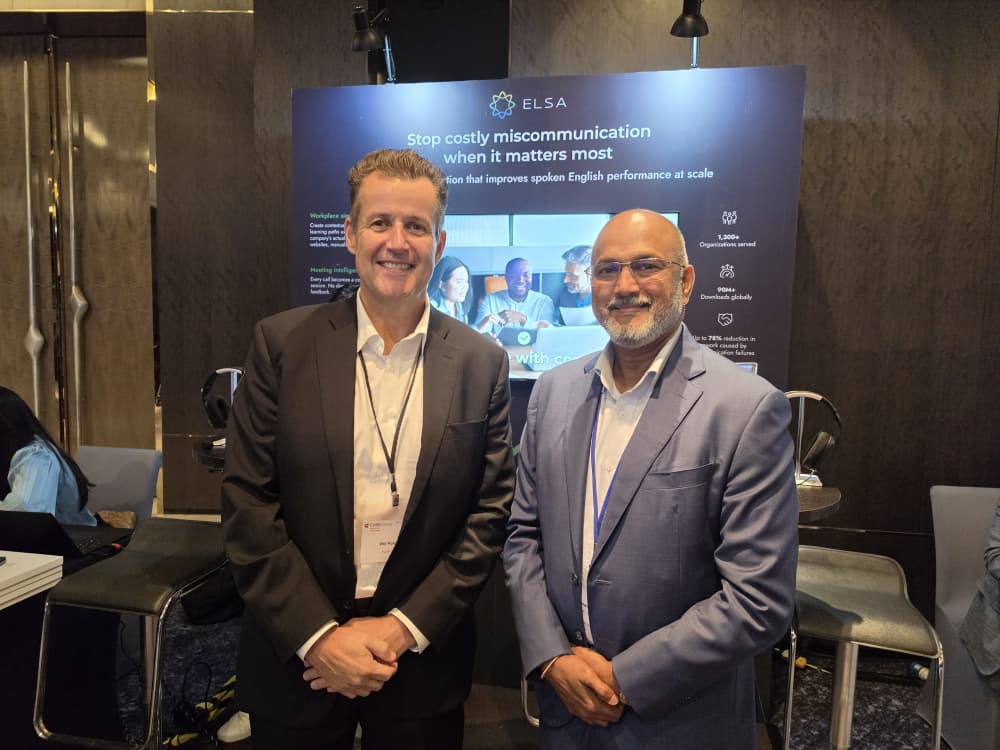
To strengthen its presence in Malaysia, ELSA has appointed K Pintar Sdn Bhd and CedarTech Training Sdn Bhd as its authorised local partners. Malaysia is among a select group of markets where the company operates through strategic partnerships rather than direct market access. ELSA Vice President of Revenue, Will Polese, said the platform leverages artificial intelligence to create personalised learning experiences tailored to individual users.
He explained that the system evaluates a user’s native language and proficiency level before generating a customised learning pathway. Users can also select AI coaches based on gender and preferred accents, including American and British English, while completing short daily learning sessions designed to fit into busy work schedules.

-Advertisement-
One of the platform’s key features is its ability to provide immediate and detailed pronunciation feedback, enabling users to identify and correct speech inaccuracies in real time. All learning materials are aligned with internationally recognised standards, including TOEFL, IELTS and Cambridge English, ensuring that users receive training that meets global benchmarks.
Beyond individual learning, organisations can upload their internal training materials onto the platform, allowing them to be transformed into digital learning modules. These resources are supported by more than 8,000 industry-specific modules covering sectors such as aviation, hospitality, healthcare, manufacturing, TVET education and financial services.
The aviation industry is among the sectors where ELSA has developed specialised content, including terminology and communication modules designed for pilots, cabin crew and ground operations personnel. The company has also engaged with aviation stakeholders regarding potential adoption of the platform, while Singapore Airlines is among regional carriers already utilising the solution.
Polese said the company’s objective extends beyond helping users speak accurate English, focusing instead on building the confidence needed to communicate effectively in professional environments. ELSA reported that organisations using its platform have achieved significant improvements in communication outcomes, including reductions in rework linked to communication breakdowns. The company also cited strong returns on investment among enterprise clients.
A study conducted by International Data Corporation (IDC) on behalf of ELSA found that 86 per cent of organisations in the region reported revenue growth following the adoption of the platform. The company currently works with more than 1,300 organisations globally and maintains a presence across several regional markets, including Singapore, Indonesia, Vietnam and Thailand.
Meanwhile, K Pintar Sdn Bhd Founder and Chief Executive Officer RA Thiagaraja said Malaysian businesses often lose valuable opportunities not because employees lack English proficiency, but because they struggle to perform effectively when communication matters most. He noted that many organisations continue to confuse language proficiency with communication performance, resulting in missed business opportunities, weaker client engagement and talent development challenges.
RA Thiagaraja added that conventional language training programmes frequently record low completion rates and limited measurable impact, creating demand for more adaptive and results-driven solutions powered by artificial intelligence. Available through both mobile and desktop platforms, ELSA operates on a subscription-based model designed to support communication development for individuals and organisations alike. – The Capital Post