

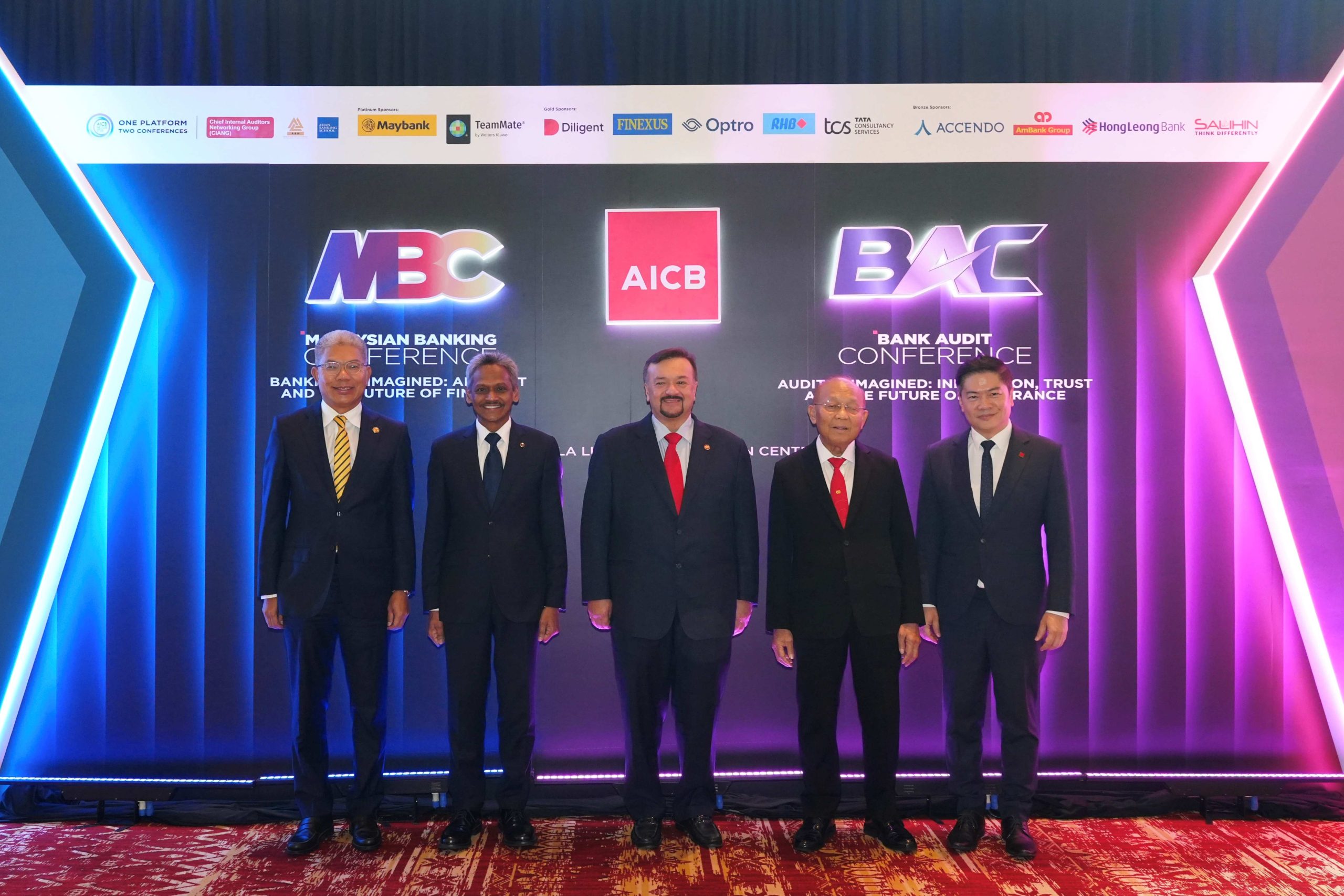
KUALA LUMPUR, 12 July 2026 (The Capital Post) – More than 1,000 banking, audit and regulatory leaders gathered at the Asian Institute of Chartered Bankers’ (AICB) 4th Malaysian Banking Conference (MBC 4.0) and 2nd Bank Audit Conference (BAC 2.0) to discuss the responsible adoption of artificial intelligence (AI), governance, cybersecurity and workforce readiness in Malaysia’s financial sector.
The conferences, themed Banking Reimagined: AI, Trust and the Future of Finance and Audit Reimagined: Innovation, Trust and the Future of Assurance, were officially launched by Finance Minister II Senator Datuk Seri Amir Hamzah Azizan and Bank Negara Malaysia Governor Dato’ Seri Abdul Rasheed Ghaffour.
Organised by AICB’s Chief Internal Auditors Networking Group (CIANG), The Association of Banks in Malaysia (ABM) and the Asian Banking School (ABS), the event focused on how AI, governance, sustainability and digital transformation are reshaping the future of banking and assurance.
A key highlight of the conference was the launch of the AICB-Ecosystm AI in Practice: How Malaysia’s Banks & DFIs are Adopting and Governing AI report, jointly developed by AICB, Ecosystm and AICB’s Chief Risk Officers’ Forum.
Based on feedback from nearly 90 senior leaders across commercial banks, digital banks and development financial institutions, the report found that while AI is increasingly used in customer onboarding, fraud detection, anti-money laundering compliance and employee productivity, only 25 per cent of respondents trusted AI-generated outputs sufficiently to support key business decisions.
Speaking at the conference, Amir Hamzah said industry-led initiatives such as AICB’s AI Governance Framework demonstrate how trust can be built through responsible leadership and self-regulation.
-Advertisement-
“The AI Governance Framework developed by AICB’s Chief Risk Officers’ Forum reflects the kind of industry-led initiative that the sector needs today. Rather than being a government-led directive, it represents the banking industry taking the lead in setting its own standards and responsibilities,” he said.
Meanwhile, Abdul Rasheed said innovation must be accompanied by strong governance to ensure public confidence in the financial system.
“Innovation is not just adoption of technology, but also about leadership and governance to ensure that the financial system we build remains trusted and firmly anchored in the needs of society,” he said.
The conference also highlighted growing concerns over workforce readiness. According to the World Economic Forum’s Future of Jobs Report 2025, nearly 39 per cent of workers’ core skills are expected to change by 2030 due to AI, automation and digital technologies. Complementing these findings, an AICB survey involving 99 financial institutions found that 67 per cent considered their workforce only moderately prepared to meet future skills requirements, with cybersecurity threat intelligence and data science identified as the areas facing the greatest talent shortages.
AICB said the conference reinforces its commitment to developing future-ready banking professionals through initiatives such as the Future Skills Framework and FSF Xcel, aimed at strengthening the resilience, competitiveness and trustworthiness of Malaysia’s financial sector. – The Capital Post.