

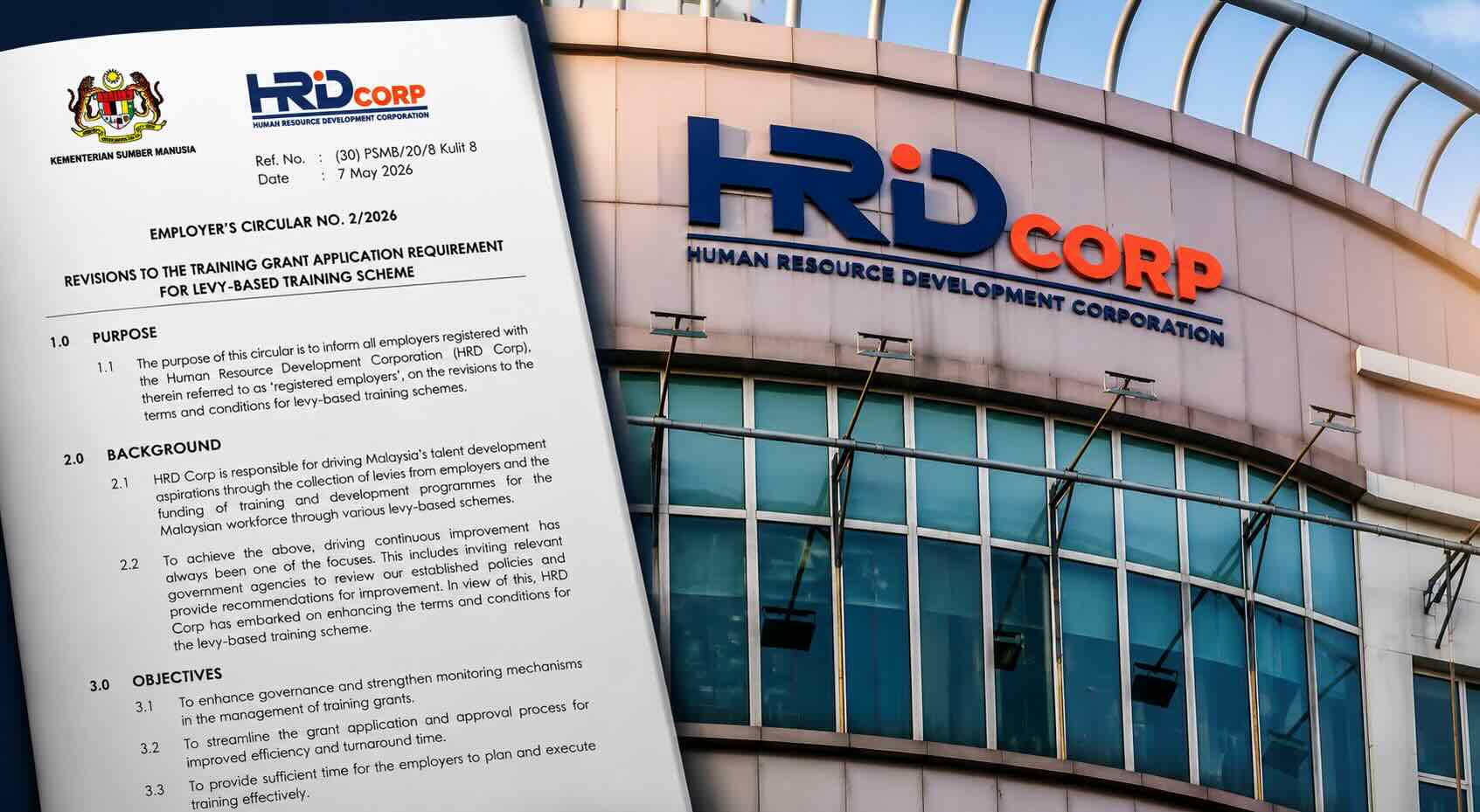
KUALA LUMPUR, 2 June (The Capital Post) – HRD Corp’s newly introduced revisions to levy based training grant applications are facing mounting backlash from training providers, employers and SME operators nationwide, with many describing the new requirements as rigid, impractical and disconnected from real industry operations.
Under HRD Corp Employer’s Circular No. 2/2026, which takes effect on 15 June 2026, employers must now obtain grant approval at least 14 calendar days before any training programme can commence. The revised SOP also removes modification requests, abolishes appeals entirely, limits applications to only one query and introduces stricter verification mechanisms for approved programmes.
The move has triggered widespread criticism across HRD Corp’s official Facebook announcement and several HRDC certified training provider community groups, where many questioned why the system appears to be becoming more bureaucratic rather than more efficient.
While HRD Corp said the revisions are intended to strengthen governance, improve efficiency and streamline grant approvals, industry players argue the new framework will instead slow down workforce training processes and create operational bottlenecks, particularly for SMEs and public training providers.
Training providers warned that the mandatory 14 day approval requirement effectively eliminates the flexibility needed for urgent or short notice training arrangements, including compliance programmes, technical upskilling and retraining exercises often required after workplace incidents, audits or operational changes.
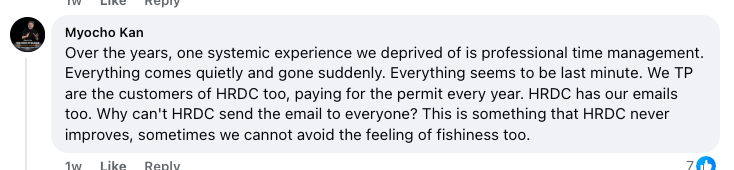
Myocho Kan, commenting within a training provider community discussion, described the move as detached from industry realities.
“One systemic experience we are deprived of is professional time management. Everything comes quietly and goes suddenly. We training providers are customers of HRD too, paying for the permit every year,” he said.
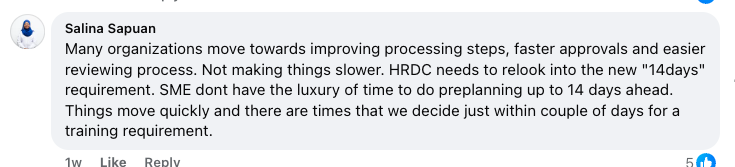
Salina Sapuan also criticised the new requirement, saying SMEs often require immediate training arrangements to respond to operational demands.
“Many organisations move towards improving processing steps, faster approvals and easier reviewing process. Not making things slower. SMEs don’t have the luxury of time to do preplanning up to 14 days ahead,” she commented.
Industry players further raised concerns over the removal of flexibility mechanisms previously relied upon to manage real world operational disruptions.
Under the revised process, employers are no longer allowed to modify approved grants. Any changes involving dates, trainers, participants or venues would require cancellation of the original application followed by an entirely new submission and approval process. Appeals will also no longer be entertained under the new SOP.
Training providers argued that such rigid requirements fail to reflect the realities of workforce training operations where scheduling changes, trainer availability issues, participant replacements and sudden operational adjustments are common occurrences.
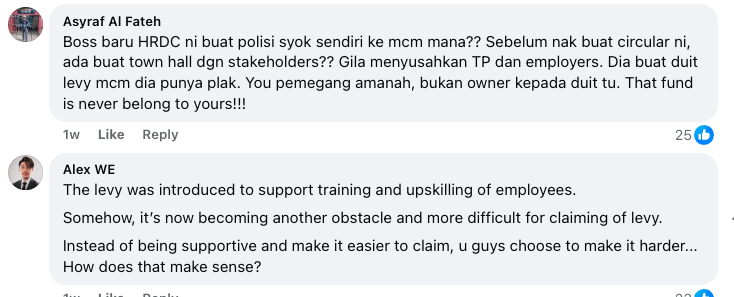
Another commenter, Asyraf Al Fateh, questioned whether sufficient stakeholder engagement had taken place before the circular was introduced.
“Before making this circular, was there proper discussion with stakeholders? This only makes things difficult for training providers and employers,” he wrote.
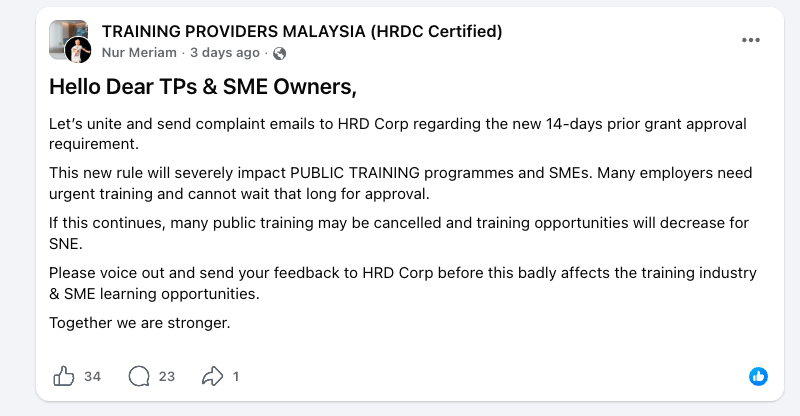
Concerns were also raised over the impact on public training programmes, where participant confirmations are often finalised much closer to the actual training dates.
-Advertisement-
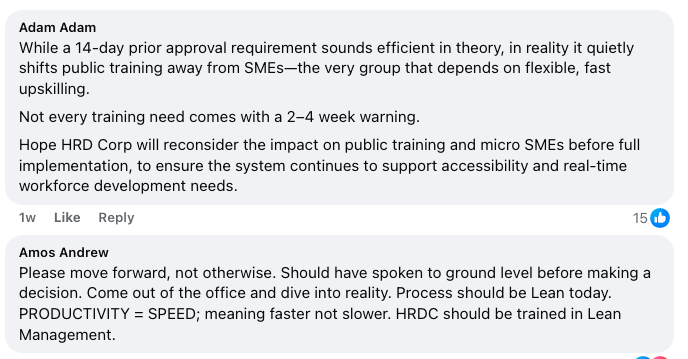
Adam Adam warned that the revised SOP could unintentionally reduce SME participation in workforce upskilling programmes.
“While a 14 day prior approval requirement sounds efficient in theory, in reality it quickly shifts public training away from SMEs — the very group that depends on flexible, fast upskilling,” he commented.
Criticism also intensified over the new one query limitation, which requires employers to respond within five calendar days or risk automatic application expiry.
Industry players said the new process places additional pressure on SMEs, smaller HR departments and training providers managing multiple grant applications simultaneously.
Alex WE, another industry member participating in the online discussions, said the revised framework appears to contradict the original purpose of the levy system.
“The levy was introduced to support training and upskilling of employees. Somehow, it’s now becoming another obstacle and more difficult for claiming,” he said.
Others questioned whether the stricter compliance framework could eventually discourage employers from utilising levy funds altogether.
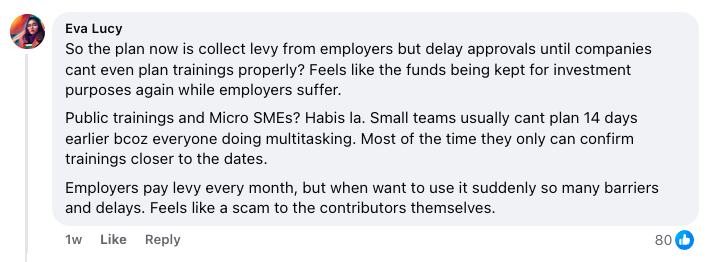
Eva Lucy warned that public trainings and micro SMEs may ultimately suffer the most under the revised system.
“Employers pay levy every month, but when they want to use it suddenly there are so many barriers and delays. Public trainings and micro SMEs are the ones that will suffer the most,” she commented.
Amos Andrew meanwhile criticised what he described as a move away from lean and efficient administrative processes.
“Productivity means speed, meaning faster not slower. HRD Corp should come out and understand ground realities before implementing such decisions,” he said.
In a separate discussion shared within a HRDC certified training providers Facebook community, members were also encouraged to collectively submit complaints to HRD Corp over concerns that the revised SOP could severely impact public training programmes and SME learning accessibility.
Industry observers believe the revised SOP signals a broader shift from a flexibility driven training ecosystem towards a stricter compliance and enforcement based model.
As criticism continues to grow ahead of implementation next month, many within the training industry are now urging HRD Corp to reconsider several aspects of the revised requirements to avoid disrupting workforce upskilling efforts and SME participation in training programmes. – The Capital Post.