

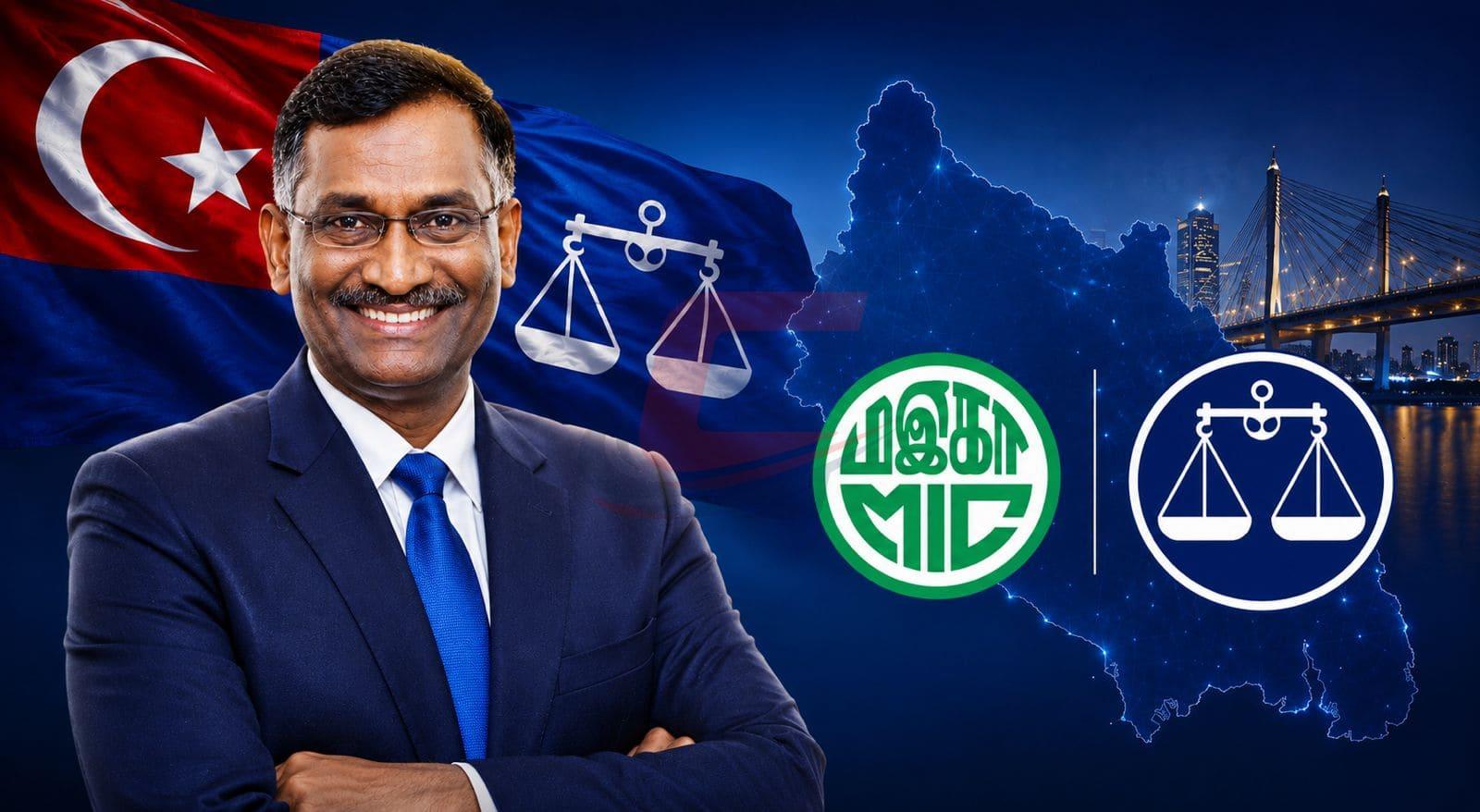
Johor’s Indian community is no longer a silent vote bank. As the state edges toward its next election, there’s a clear shift in the air: voters want results, not rhetoric. And for the Malaysian Indian Congress, that shift is becoming an opportunity.
The party looks poised to strengthen its foothold and win greater representation in the state assembly if it can deliver on the promise it’s been rebuilding.
Much of that promise comes from MIC President Tan Sri SA. Vigneswaran. His leadership hasn’t been flashy, but it’s been steady. Instead of chasing headlines, he’s focused on rebuilding MIC’s grassroots machinery, reconnecting with voters door to door, and repositioning the party as a constructive voice inside Barisan Nasional.
That matters. After years of voter scepticism, stability itself is a political statement.
Under Vigneswaran, MIC has also pivoted. Service oriented politics, real youth participation, and engagement beyond the party’s traditional base are no longer talking points they’re the operating model. This shift is important because today’s voters, especially young Malaysians, judge parties by delivery, not history. Legacy alone doesn’t win trust anymore. Work does.
Nowhere is that clearer than in Johor, where MIC’s resurgence has a face: Raven Kumar Krishnasamy. As the long serving Tenggaroh assemblyman and Johor State Executive Council member, he’s built a reputation for being accessible and hands on. He shows up, he listens, and he follows through. His ability to connect across racial and socio economic lines reflects what a modern MIC leader needs to look like less about identity politics, more about problem solving.
That ground level performance has done something critical for MIC’s credibility. It proves the party can still play an effective role in government. Raven Kumar’s work on local infrastructure, business support, and community welfare shows that MIC representatives can contribute directly to Johor’s development agenda while staying rooted in grassroots needs. Voters notice that difference. In seats where people are tired of empty promises, capable and results-driven leadership becomes the deciding factor.
Onn Hafiz Ghazi: A Chief Minister who opened the door
-Advertisement-
MIC’s momentum in Johor doesn’t exist in a vacuum. Chief Minister YAB Dato’ Onn Hafiz Ghazi has played a quiet but decisive role. Since taking office, he’s made space for Indian community leaders at the decision making table. Town halls in Indian majority areas, direct allocations for Tamil schools and temples, skills training for Indian youth these aren’t token gestures. They signal that the state government sees the Indian community as partners in Johor’s growth, not just recipients of aid.
That partnership gives MIC leaders breathing room to perform. With Onn Hafiz backing infrastructure upgrades, entrepreneurship programs, and social welfare projects, MIC’s message of being BN’s “constructive voice” actually translates into outcomes. For voters, that’s the test. When cooperation between the Chief Minister’s office and MIC shows up as better roads, funded schools, and real job opportunities, trust grows. And growing trust is exactly why optimism around MIC is building ahead of polling day.
With Barisan Nasional campaigning on stability, economic growth, and effective governance, MIC is riding the right wave. But waves don’t win elections votes do. If the party can convert its grassroots rebuild and leadership strengths into actual ballots, Johor won’t just be another state election. It will be the platform where MIC proves it’s still relevant, still needed, and still capable of representing Malaysian Indians in power.
The people will decide. But the groundwork is there. Vigneswaran’s steady hand at the top, Raven Kumar’s track record on the ground, and Onn Hafiz’s willingness to work with MIC have changed the equation. If MIC capitalizes on this moment, the next Johor State Assembly won’t just have more MIC voices. It will have a more representative one.
Written by Datuk P. Kamalanathan, MIC Central Working Committee, Former Deputy Minister of Education (2013 – 2018) & Former Member of Parliament for P.094 Hulu Selangor (2010 – 2018)
The views expressed are those of the author and do not necessarily reflect those of The Capital Post.