

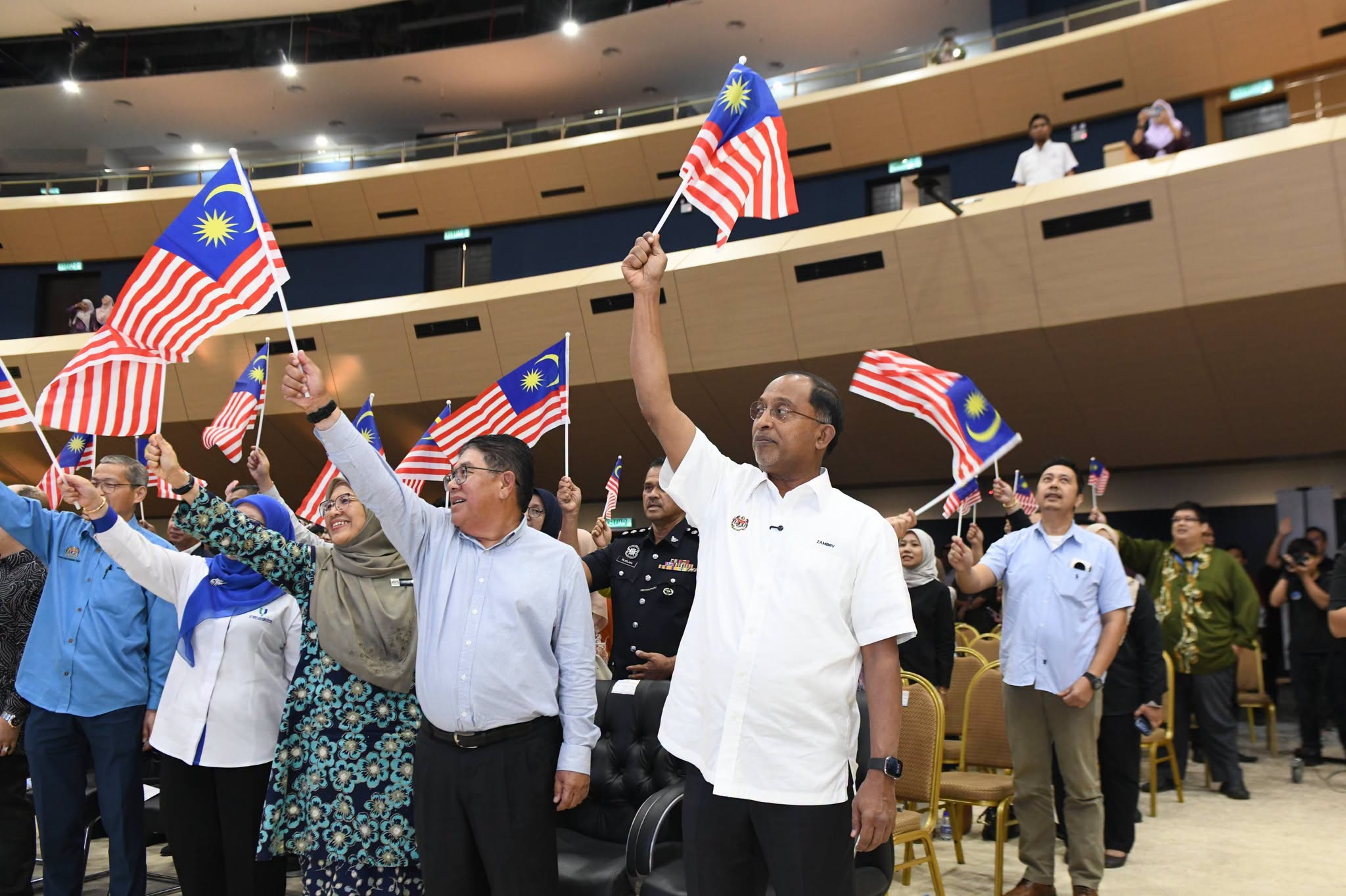
PEKAN, PAHANG, 28 August 2026 (The Capital Post) – The proposed One Higher Education Act (OHEA) is being developed to provide a more unified legal framework for Malaysia’s higher education ecosystem, Higher Education Minister Dato’ Seri Diraja Dr. Zambry Abd Kadir said.
He said the proposed framework should cover the overall higher education ecosystem rather than focus solely on student freedom, taking into account the roles of students, academics and university administrators, as well as university establishment, governance and academic development.
Zambry said the reform was in line with the Malaysia Higher Education Plan (RPTM) 2026-2035, which serves as a foundation for broader changes to the country’s higher education system, including efforts to streamline the various laws currently governing higher education institutions and their communities.
He made the remarks during the Kembara KARISMA programme, which provided a platform for direct interaction and discussion with about 500 young lecturers and administrators from higher education institutions (IPTs) in the East Coast Zone.
“Programmes such as Kembara KARISMA are important because we can interact directly with young lecturers and administrators to hear their views and the issues they face in carrying out their responsibilities at their respective institutions,” he said.
Zambry stressed that greater student freedom must be accompanied by character development, responsibility, courtesy and academic professionalism.
At the same time, he said the views of academics and administrators must also be given due consideration to ensure decision-making in higher education does not revolve solely around the student voice.
“We do not want to see all these Acts becoming restrictive Acts,” he said, stressing that legal reforms should provide greater space for the higher education community while maintaining the principles and responsibilities of all parties.
The interaction session also touched on subsidised tuition fees, with Zambry saying the principle of ensuring access to higher education for all should be maintained while taking into account students from different backgrounds.
He said technical matters concerning the subsidy mechanism would also be examined as part of the process of developing the new proposals.
-Advertisement-
On research, Zambry said efforts to secure greater allocations for high-impact research should continue, alongside closer cooperation between universities, relevant ministries and industry to create more opportunities for young academics.
He also called for a change in the approach to sabbatical leave, allowing lecturers to conduct research directly within industry, including multinational companies equipped with advanced facilities and technologies. Such experience, he said, should also be considered in promotion processes.
On the welfare of young lecturers, Zambry said teaching workloads should be assessed based on the type and function of each university to ensure lecturers have sufficient time to read, conduct research and adapt their teaching to changing generations and technological developments.
The Kembara KARISMA programme also saw the presentation of CEO@Faculty appointment letters to Tanah Makmur Berhad chief executive officer Dato’ Shahrul Nizam Abdul Aziz and Western Digital Tech and Regional Center Malaysia Sdn. Bhd. vice-president and managing director Dato’ Raghu Bathanathan for the Faculty of Industrial Management at Universiti Malaysia Pahang Al-Sultan Abdullah (UMPSA).
The appointments were described as part of efforts to strengthen strategic links between academia and industry.
The session, held at the UMPSA Pekan Campus Convocation Hall, concluded with the waving of the Jalur Gemilang and a rendition of the national flag song in conjunction with National Month celebrations.
Also present were Director-General of the Department of Polytechnic and Community College Education Dr. Shamsuri Abdullah; UMPSA Board of Directors chairman Dato’ Seri Abdul Razak Jaafar; UMPSA Vice-Chancellor Prof. Ts. Dr. Yatimah Alias; AKEPT director Prof. Dr. Harshita Aini Haroon; Malaysian Qualifications Agency chief executive officer Dato’ Prof. Dr. Mohammad Shatar Sabran; as well as vice-chancellors and directors of public higher education institutions.
According to a post on the official Facebook page of the Ministry of Higher Education, the Kembara KARISMA programme provided a platform for engagement between higher education leaders and young academics and administrators on the future direction of the sector. – The Capital Post