

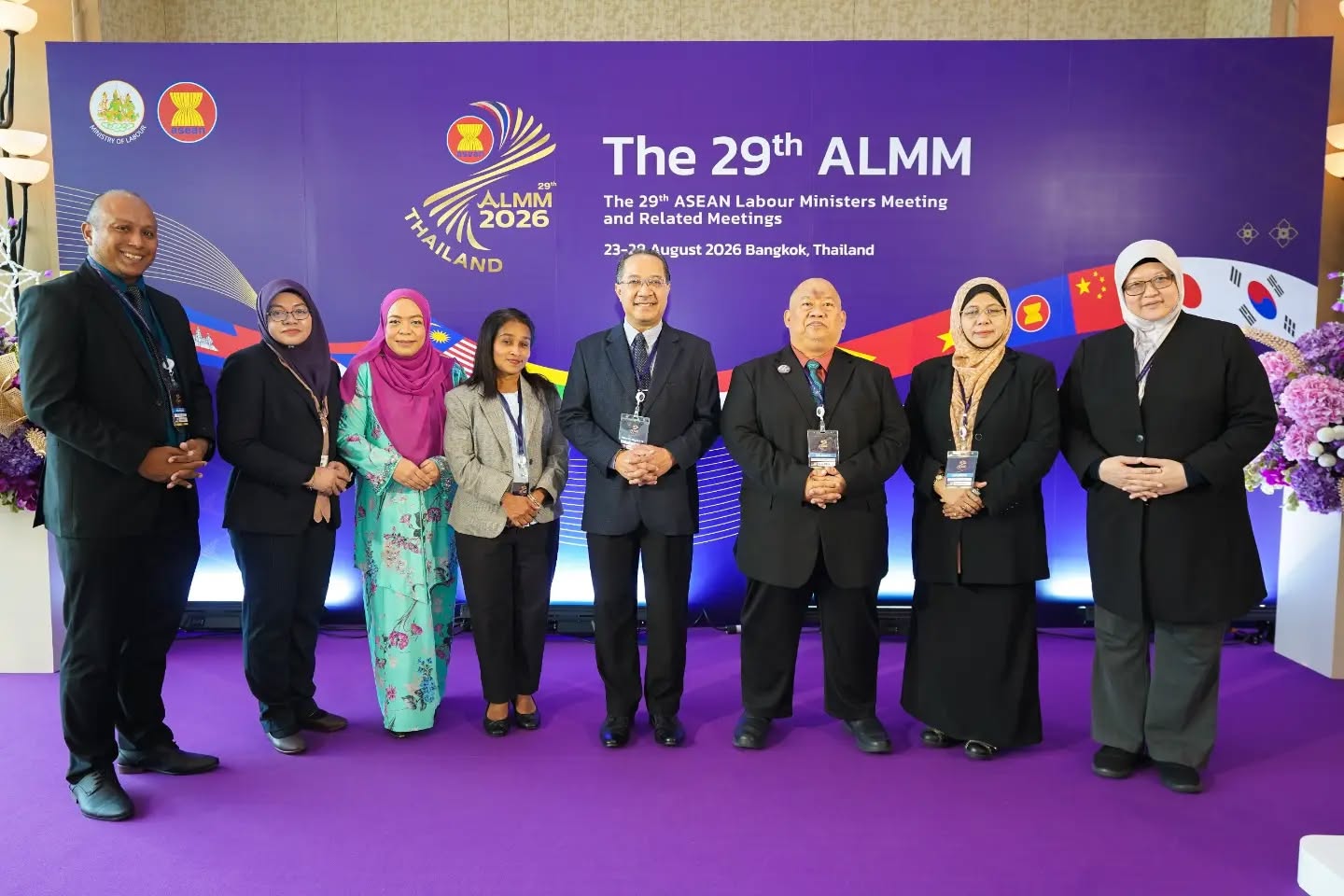
BANGKOK, Thailand, 26 August 2026 (The Capital Post) – Malaysia has reaffirmed its commitment to strengthening regional labour cooperation with ASEAN and its Dialogue Partners China, Japan and South Korea through the 24th ASEAN Senior Labour Officials Meeting Plus Three (SLOM+3).
The Malaysian delegation was led by Deputy Secretary-General (Policy and International) of the Ministry of Human Resources (KESUMA), YBrs. Dr. Hj. Mohd Shaharin bin Umar, at the meeting held in Bangkok, Thailand, on 25 August.
The meeting brought together SLOM officials and senior labour officials from China, Japan and South Korea to strengthen regional cooperation in labour affairs and workforce development.
Discussions included reports on regional labour programmes, activities and cooperation, particularly in training, skills development and Technical and Vocational Education and Training (TVET) under the 2021–2025 Work Plan.
The meeting also reviewed preparations for the implementation of a new work plan covering the 2026–2030 period.
-Advertisement-
Malaysia welcomed and reaffirmed its commitment to SLOM+3 cooperation in pursuing strategic goals to develop a skilled and adaptable workforce, promote harmonious, safe and progressive workplaces, and expand effective social protection.
Malaysia also expressed full support for the SLOM+3 cooperation framework, which focuses on five key areas: quality employment for vulnerable groups; human resource development, including TVET and digital and green skills; leveraging technology for the future of work; tripartism and social dialogue; and corporate social responsibility (CSR).
KESUMA’s participation reflects Malaysia’s continued commitment to working with ASEAN member states and Dialogue Partners to address changes in the employment landscape and ensure the regional workforce remains competitive, skilled and prepared for future needs.
According to a post on the official Facebook page of the Ministry of Human Resources, Malaysia remains committed to strengthening regional labour cooperation through the sharing of expertise and policy coordination. – The Capital Post